
The Ancient Sources Behind the Method
How I created my fire-reading method:
A reconstruction of ancient Roman religious principles and practices relating to fire divination and the rituals of the Vestal Virgins
Fire and candle reading, as practiced by me, is a genuine reconstruction, built from primary sources that discuss the way the ancient Romans related to fire, and how they practiced divination more broadly. Several ancient texts describe, in real detail, both the mechanics of Roman divination and the specific sanctity of Vesta's flame. Together, they form the historical foundation this method draws on.
Cicero, De Divinatione (44 BCE). Cicero's two-book dialogue is the single most important surviving Roman text on divination as a discipline. Cicero preserves exactly how seriously, and how systematically, his contemporaries pursued these practices. That systematic spirit is the backbone of this method.
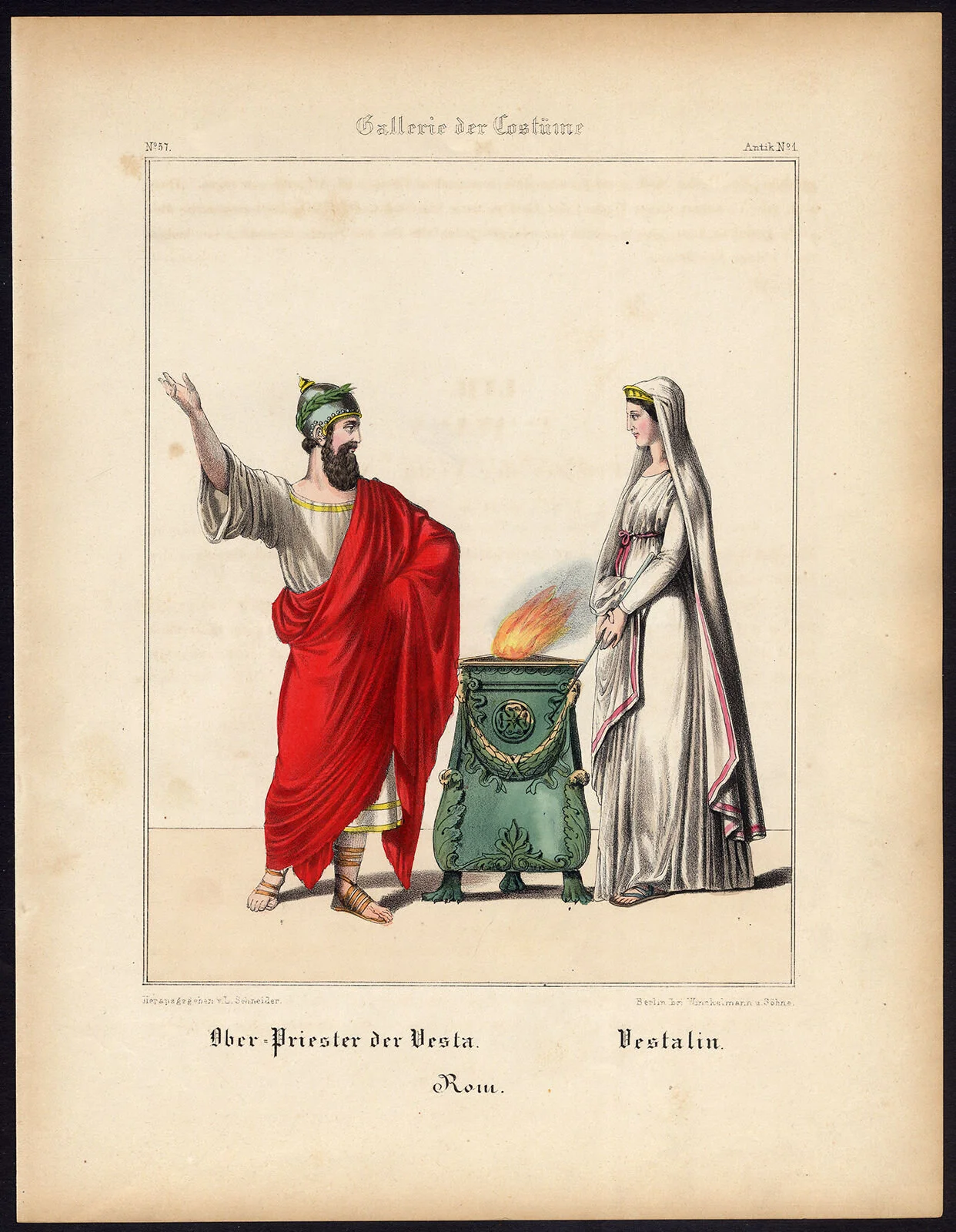
Plutarch, Life of Numa. Plutarch's biography of Rome's second king credits Numa with founding the Vestal order and entrusting the sacred fire to virgin priestesses, reasoning that fire's pure, uncorrupted nature called for guardians of the same character. Plutarch also describes the strict ritual for rekindling the flame if it ever went out. It's a detail that says everything about how exacting the Romans were when it came to this particular fire.
Dionysius of Halicarnassus, Roman Antiquities. Writing in the same period, Dionysius gives the fullest surviving account of the Vestals' founding and the theological logic of the flame — its identification with Vesta and, by extension, with the hearth of the Roman state itself. He also notes that some knowledge connected to the temple was kept from the public record entirely, reserved for the priestesses and the pontiffs alone. That gap in knowledge can be partially filled by using other writings and a deeper understanding of the way the Romans thought about their gods.
Ovid, Fasti, Book 6. Ovid's poetic calendar of Roman festivals returns repeatedly to Vesta, her fire, and the rituals surrounding it, offering some of the richest surviving detail on how ordinary Romans understood and observed her worship throughout the year.
Classical fire and smoke divination. Beyond Vesta specifically, Greco-Roman antiquity recognized formal categories of fire-based divination. Indeed, watching fire for meaning was an established, named practice across the ancient world.
Beyond the Flame Itself: The Wider Grammar of Roman Religion
This method doesn't stop at fire. Roman religious practice had its own internal logic — a grammar of numbers, symbols, and divine roles — and that grammar shapes how a reading is interpreted here just as much as the flame does.
Numbers carried real religious weight in the ancient world. For example, the great Virgil said that "the god delights in odd numbers" (numero deus impare gaudet), and three, seven, and nine all held recurring significance across Roman ritual and myth, from the triadic nature of the Fates to various cycles. Whole numbers similarly have their own range of meaning.
Symbolism worked the same way. Romans read meaning into the appearance, direction, position, and material of things. Meanwhile, the gods each presided over a distinct domain of life.